
Chimney repair in Littleton.
Crowns, caps, flashing, mortar joints, firebrick and liners repaired early, before water and heat find a way through.
- reviews on Googleas of
Office Mon to Fri 7 AM to 7 PM, Sat 8 AM to 5 PM. Book online any hour.Office open now, until Office opens . Book online now.
- Book onlineAny hour
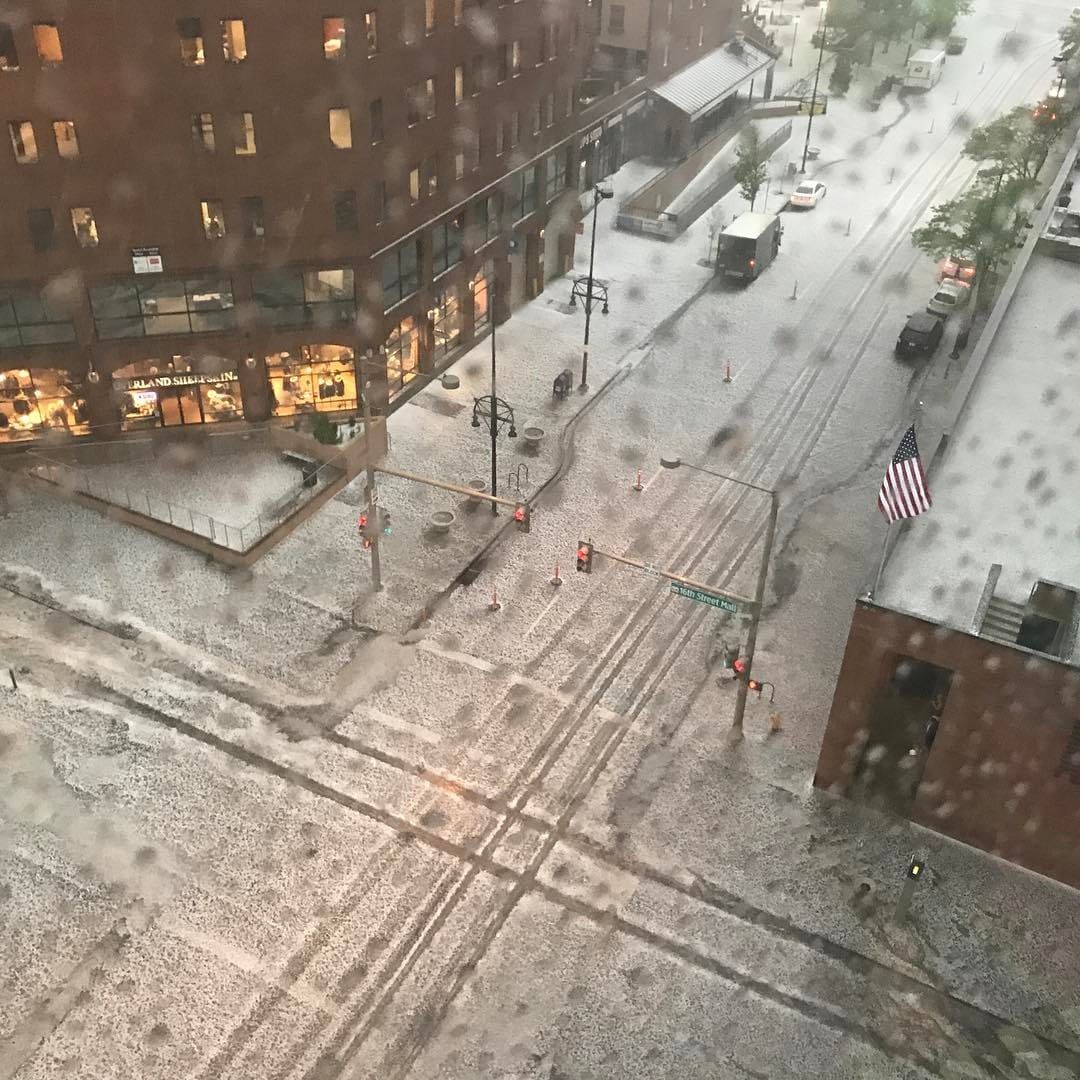
Photo: Denver Hail Storm 08May2017, Len Edgerly, CC BY-SA 2.0
What we repair, top to bottom.
Every part of a chimney wears out in its own way. The common repairs are below, with the Littleton weather that causes them.
Crowns.
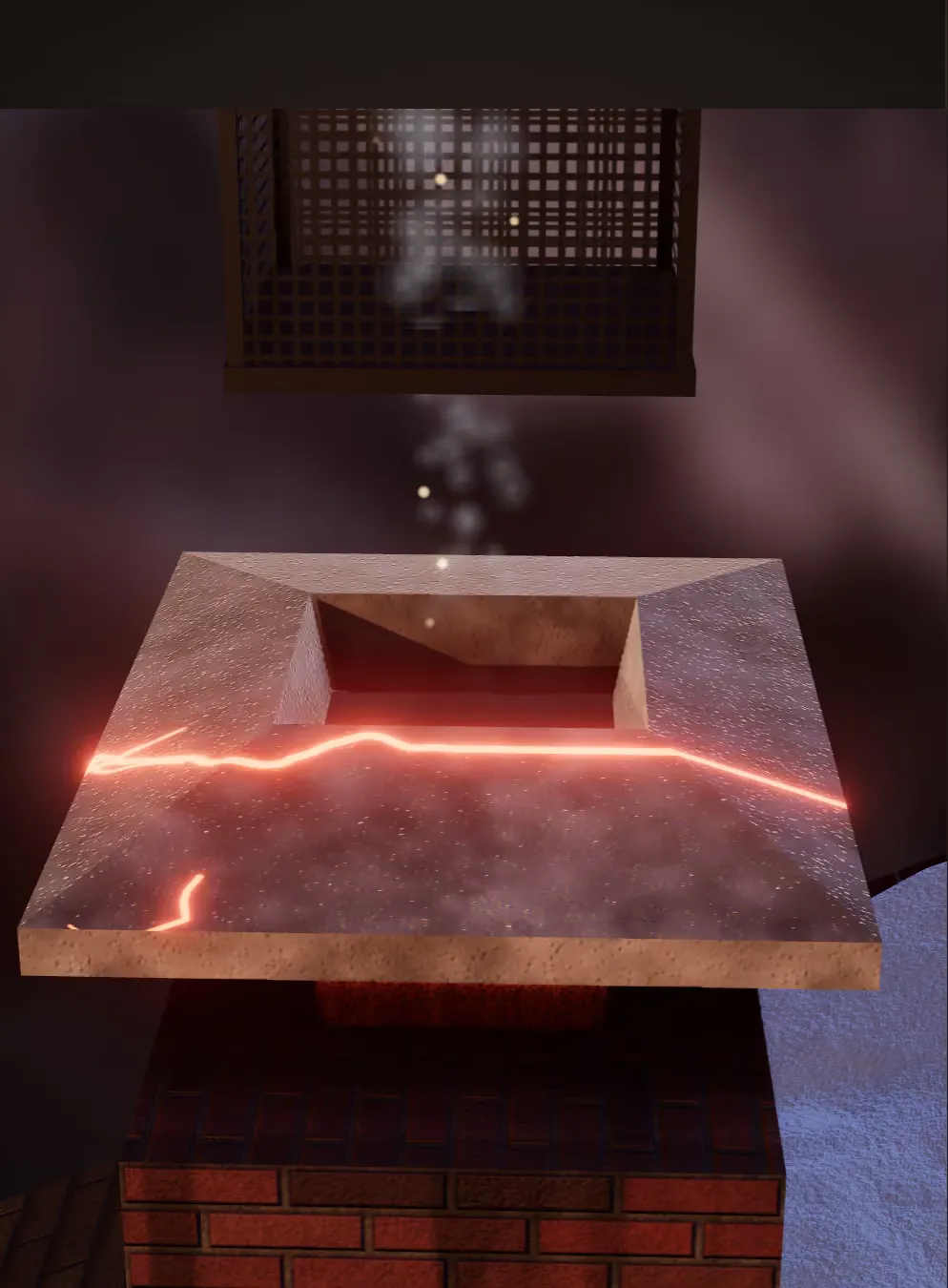
A crown is the concrete lid poured over the top of the masonry. It sheds water off the brick and the flue, and it gets the hardest use: a night freeze, an afternoon thaw, another freeze.
Ice takes up about 9% more room than water, so a hairline crack that fills and freezes is forced wider on every cycle. Seal a hairline crack while it is small; a crown that has crumbled or pulled away from the flue tile has to be rebuilt.
From our Google Business Profile Caps and spark screens.
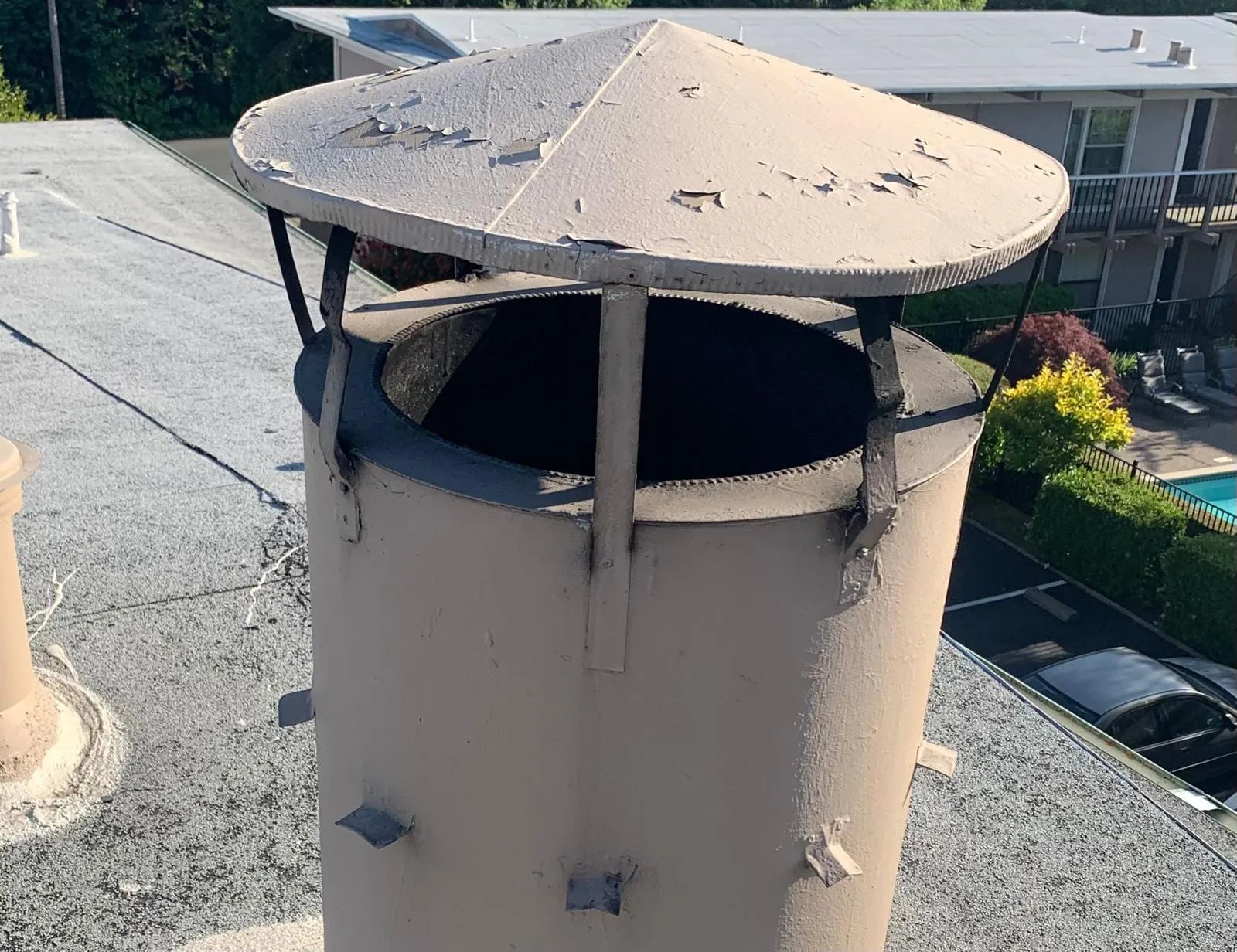
Birds, squirrels, rain and snow are stopped at the top of the flue by the cap, and its screen is the spark arrestor. Section R1003.9.2 of IRC 2021 lets the openings run from 3/8 to 1/2 inch.
Hail is the cap’s other enemy: on May 8, 2017, stones up to baseball size fell across the Denver metro area (NWS Boulder). Dents, loose fasteners and a flattened screen are what to look for afterwards.
From our Google Business Profile Flashing at the roofline.
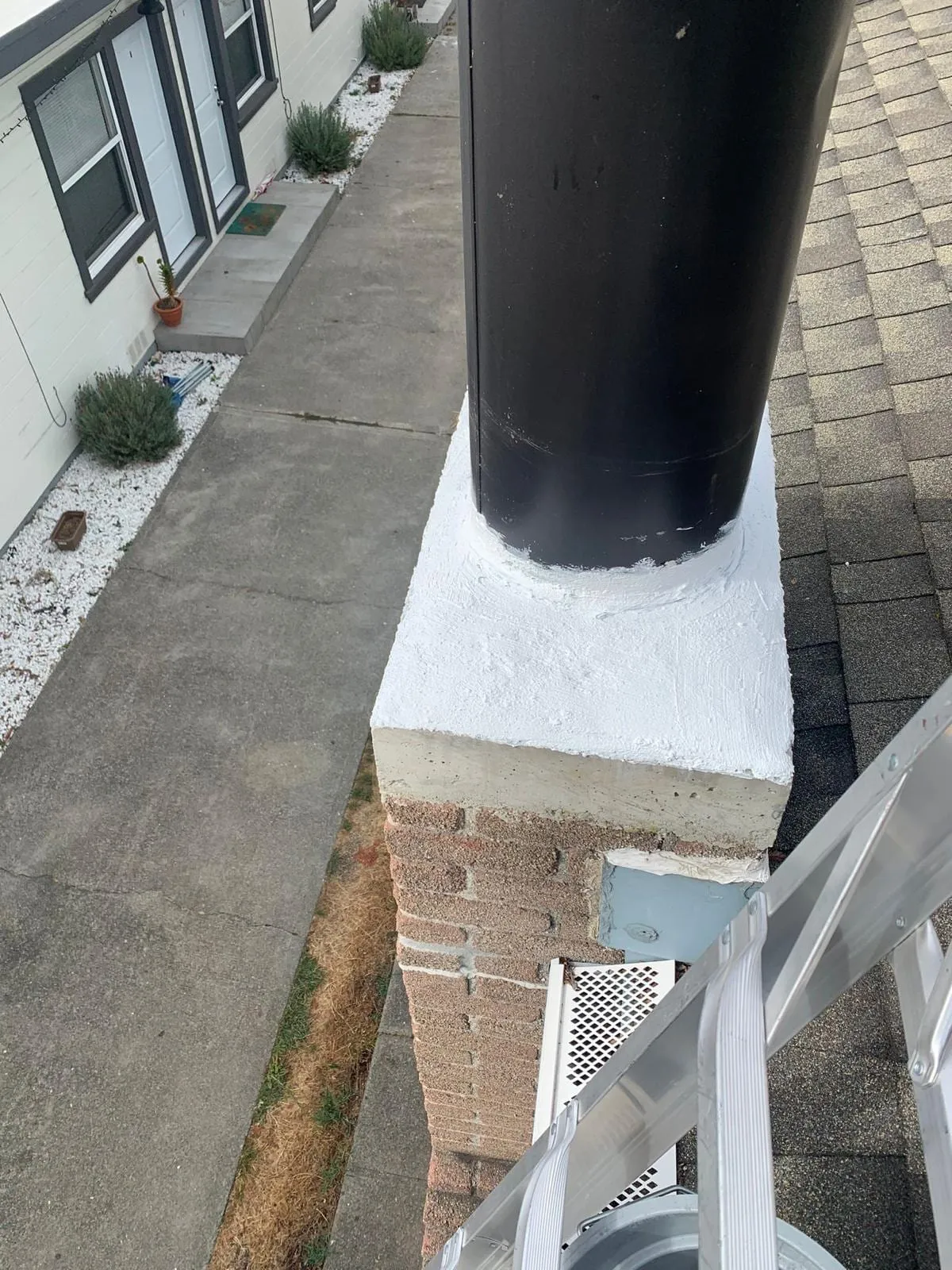
Flashing seals the gap where the chimney comes through the roof. Snow piles up on the uphill side and melts slowly there, so a lifted edge or tired sealant lets water in at exactly that spot. The first sign tends to show up indoors, as a brown stain on a ceiling or an attic wall near the chimney.
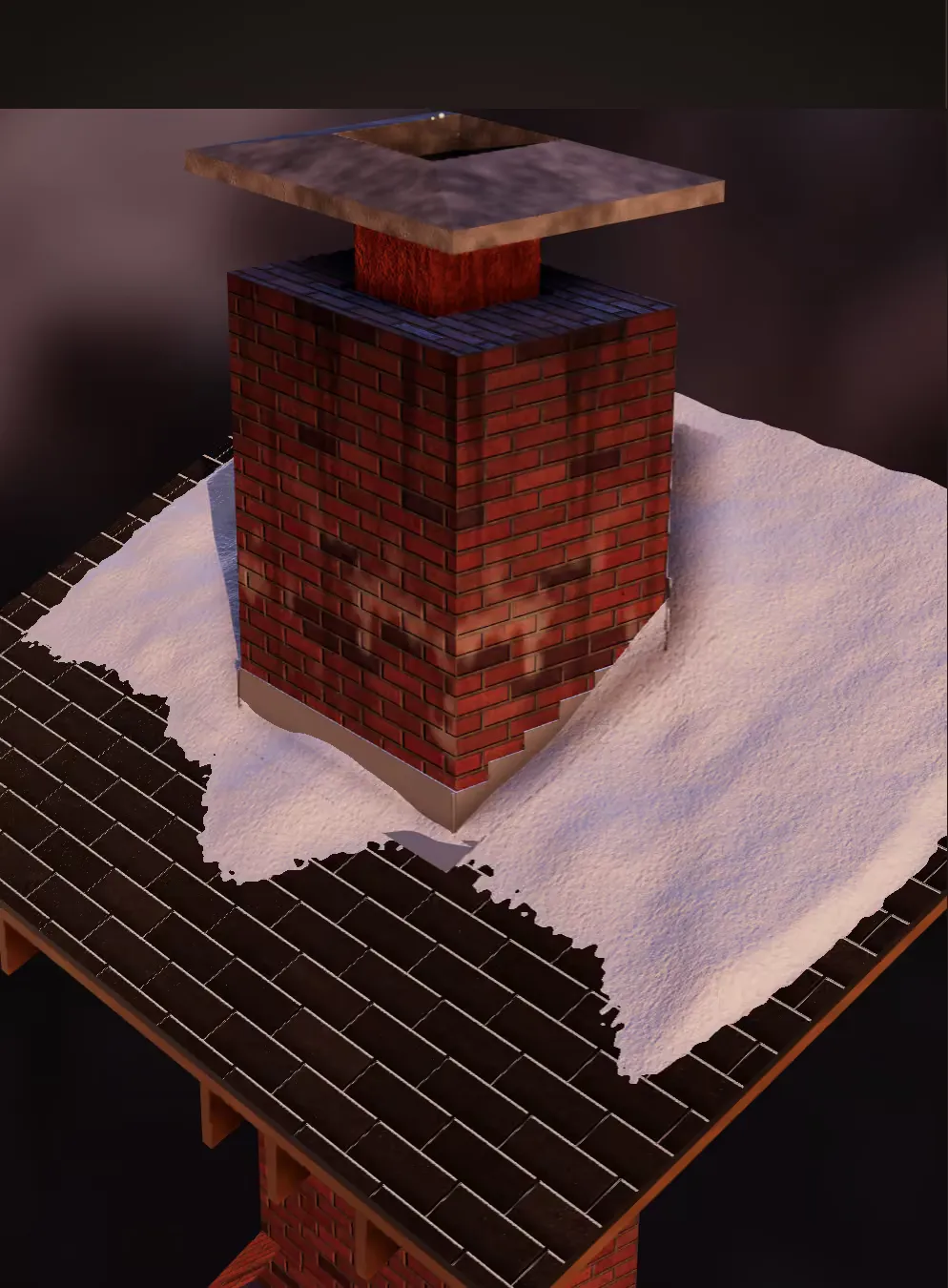
Illustration Firebox.
Fire hits the firebrick and its mortar head-on. Open joints and cracked brick let heat through to what is behind the firebox, so a small repair here protects the framing around the fireplace.
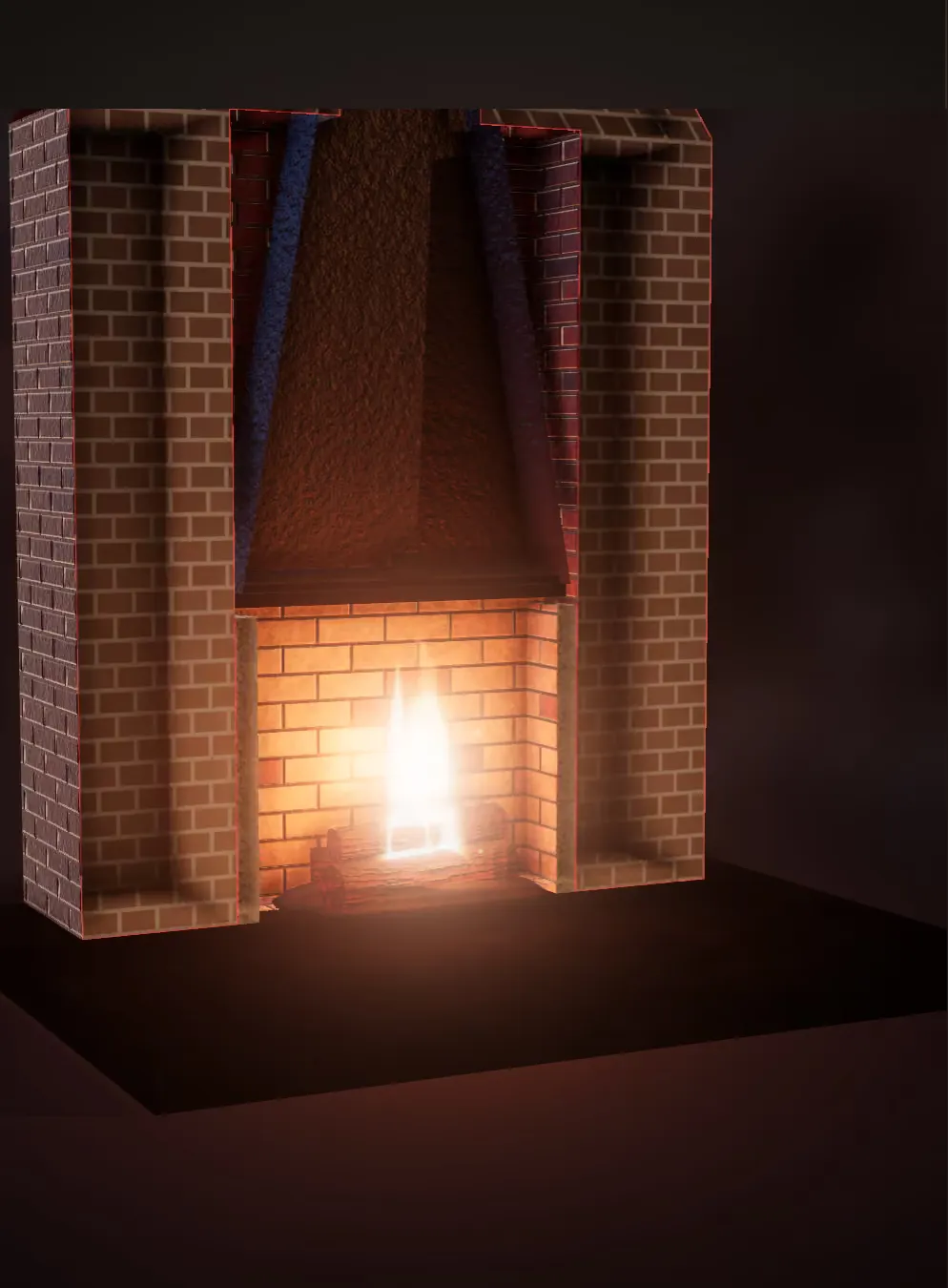
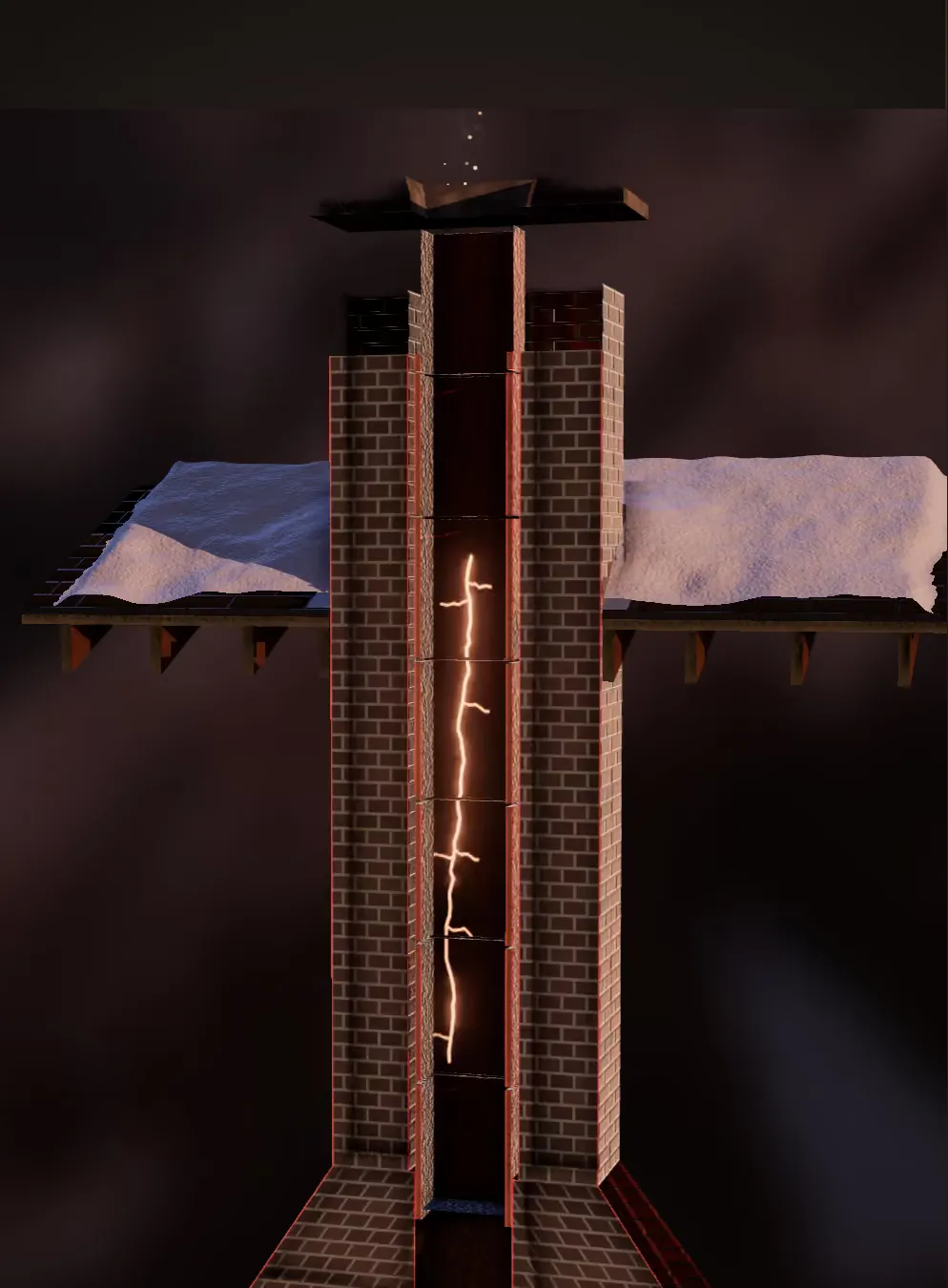
Illustration Flue liners.
Up the middle of the chimney runs the liner, which carries smoke and heat out of the house. If a tile has cracked or slipped, heat can reach the framing and gases can reach the rooms, yet from the firebox or the roof the fault usually cannot be seen. A camera pass up the flue, part of a Level 2 inspection, finds it. The median home in Littleton was built in 1982, so many liners are well into their fourth decade.
Illustration
Questions about repairs.
Plain answers, and the source where there is one.
What makes a crown crack?
The crown is the slab on top of the chimney. It freezes and thaws all winter, and ice takes up about 9% more room than water, so a hairline crack that fills and freezes widens each time. Caught early it is a small repair; left alone, it lets moisture into the brick and the flue.
Is water in the firebox serious?
Often it is. A wet hearth, or a stain on the ceiling by the chimney, usually traces back to one of four causes: the cap, the crown, the flashing or the mortar joints. An inspection shows which.
What is tuckpointing?
Putting fresh mortar into worn joints between bricks. Mortar is meant to wear away before the brick does, yet once the joints open, water gets behind the brick face and frost finishes the job. Repointing early keeps the bricks from loosening.
Is a chimney cap necessary?
In practice, yes. A cap closes the flue to rain, snow, birds and squirrels while its screen catches sparks. IRC 2021, section R1003.9.2, specifies openings of 3/8 to 1/2 inch.
Will you explain what needs fixing before work starts?
Yes. Before anything is started we go over what we found from cap to firebox, and you decide what is done and when.
How do I get a repair started?
Phone (720) 792-3635 (Mon to Fri 7 AM to 7 PM, Sat 8 AM to 5 PM), or send the form on this page at any hour and say what you have seen.

Book a visit.
Describe the problem on the form, or simply phone, and we will call back to set a time.
- 1Ask Phone the office or send the form.
- 2Callback We ring back to set a time that suits you.
- 3Visit We work down the chimney, cap first.
- 4Your call You decide what is done, and when.
Online
At any hour, by form
Photo: Roxborough Panorama, Footwarrior, CC BY-SA 3.0
Ready for the first fire of the season, or worried by something you saw up there?
Office Mon to Fri 7 AM to 7 PM, Sat 8 AM to 5 PM. Book online any hour.Office open now, until Office opens . Book online now.
Book online